

How is the playability of the stringless smart guitar?
Stringless smart guitars (often called smart guitars or digital guitars) have been gaining attention as a new type of musical instrument that sits between a traditional guitar and a music-learning device. However, when it comes to playability, the real question is not just whether it “works,” but how enjoyable and engaging it actually is over time.
Its playability can be understood through three key dimensions: ease of entry, interactive experience, and musical expansion capability.
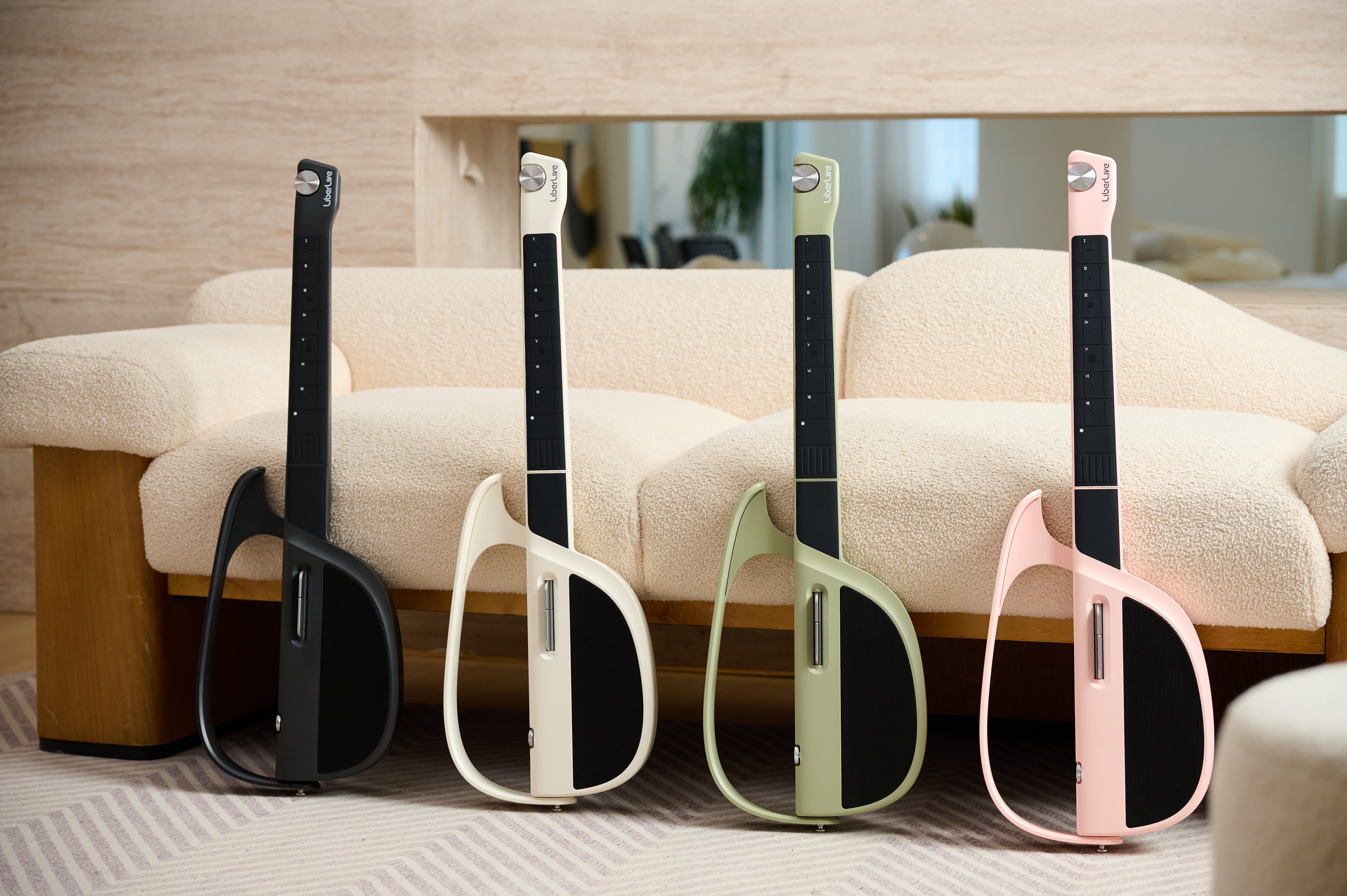
🎸 1. Instant Playability: The Lowest Learning Barrier
Traditional guitar learning involves a steep curve: finger pain, chord memorization, and coordination between both hands. These factors often slow down beginners and create early frustration.
A stringless smart guitar removes many of these barriers through digital assistance:
- Touch or sensor-based fret input instead of physical strings
- App-guided chord positioning or lighting systems
- Automatic chord recognition on some models
- Immediate sound output even for beginners
The result is a major shift in learning experience:
👉 Practice is no longer required before enjoyment begins
Users can typically play simple songs within minutes, which significantly increases early engagement and motivation.
From a playability standpoint, this “instant feedback loop” is one of its strongest advantages.
🎮 2. Gamified Experience: Turning Practice into Interaction
One of the defining features of smart guitars is their game-like learning structure. Instead of traditional repetitive practice, many models introduce interactive systems such as:
- Light-guided chord training
- Real-time scoring and performance feedback
- Rhythm-based challenges similar to music games
- Step-by-step lesson progression
- AI-assisted timing correction
This transforms practice from repetition into structured interaction:
👉 Practice becomes progression-based gameplay
Rather than “training scales,” users complete musical tasks with clear goals and rewards. This makes the experience more engaging and easier to maintain over time, especially for casual users.
🎹 3. Expanded Musical Capability: Beyond a Guitar
Another major advantage of stringless smart guitars is that they are not limited to a single instrument identity. Most devices function as multi-sound digital systems, offering:
- Electric and acoustic guitar tones
- Piano, drum, and synth sound libraries
- Looping and layering functions
- One-touch arrangement tools
- Built-in accompaniment features
This turns the instrument into something closer to a:
👉 Portable music creation platform
For beginners, this is particularly powerful because it allows them to:
- Create simple compositions without music theory knowledge
- Experiment with different sound styles
- Experience music production instantly
From a usability perspective, this greatly expands its entertainment value.
⚠️ 4. Limitations That Affect Long-Term Playability
Despite its advantages, a stringless smart guitar has clear limitations that affect how far its playability can go.
❌ Lack of physical string feedback
There is no real string tension or vibration, which reduces tactile realism.
👉 This makes it less suitable for developing traditional finger strength or advanced guitar techniques.
❌ Heavy reliance on digital systems
Most devices depend on:
- Battery power
- App/software integration
- Digital recognition systems
This introduces potential limitations in stability and long-term reliability.
❌ Limited advanced progression
While excellent for beginners, it does not fully support advanced skills such as:
- Fingerstyle mastery
- Improvisation techniques
- Live performance-level dynamics
👉 In other words, it supports entry-level learning much better than professional development.
🎯 5. Final Verdict: Is It Actually Fun?
The answer depends entirely on the user’s expectations.
👉 For beginners: Very fun and highly engaging
👉 For casual users: More like a music game with real instrument input
👉 For advanced players: More of a supportive tool than a true instrument replacement
The playability of a stringless smart guitar is not based on realism, but on accessibility and interaction.
👉 Its core value lies in making music instantly accessible, enjoyable, and interactive.
In short:
It is not designed to replace traditional guitars, but to make learning and experiencing music significantly easier and more engaging.


